Key Takeaways
- CMHC’s Fall 2024 Rental Market Report shows Calgary rents rose 8.9% year over year (October 2023 to October 2024), down from 14.3% the year prior — rent growth is slowing, but existing tenants are still paying more.
- At the same time, asking rents on platforms like Rent Faster have actually dropped — roughly 10% year over year as of October 2024 — meaning the rental market for new listings is softening.
- The CMHC numbers measure what tenants are actually paying on average, not what landlords are currently listing units for. These are two very different data sets.
- The number of rental listings in Calgary has surged — from roughly 3,000 to 9,000 on Rent Faster over the past year — signalling increased supply and more competition among landlords.
- Turnover rents (units where one tenant left and a new one moved in) rose 23.6% in Calgary — but this reflects the gap between old below-market rents and current market rates, not the direction the market is moving right now.
- As a landlord or investor, the metric that matters most to your forward-looking decisions is asking rent trends, not the CMHC average rent figure.
Introduction
If you’ve been following Calgary rental market headlines lately, you’ve probably seen something like: “Rents still rising in Calgary.” And you might be scratching your head — because if you’ve been active in the rental market at all, what you’re actually seeing feels very different. Listings are sitting longer. Asking prices are coming down. Competition for tenants has picked up.
So what’s going on? Are rents going up or aren’t they?
The answer is: both — depending on which metric you’re looking at. In this post, we break down exactly what the data says, why the headlines can be misleading, and what it all actually means for you as a Calgary landlord or real estate investor.
What the Headlines Are Saying
A recent Calgary Herald article noted that rent price increases have slowed in Calgary, even as vacancy rates climb. The framing suggests rents are still rising, just not as fast. And technically, the data they’re citing backs that up.
The source of those numbers is CMHC’s Fall 2024 Rental Market Report, which compares October 2023 to October 2024 data. CMHC Rental Market Report — Fall 2024
Here’s what those numbers show for Calgary:
- October 2022 to October 2023: 14.3% rent increase year over year
- October 2023 to October 2024: 8.9% rent increase year over year
On its face, that still looks like significant rent growth. And according to this particular dataset, it is. But it’s only part of the picture.
What’s Actually Happening on the Ground
Here’s where things get interesting — and where a lot of landlords are getting confused.
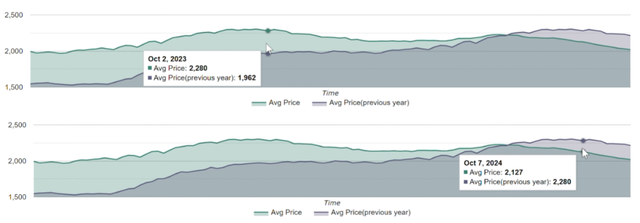
While the CMHC report shows rents rising, the asking rent data tells a very different story. Using Rent Faster — one of the most widely used rental listing platforms in Calgary, and a large enough sample to be meaningful — we looked at what landlords are actually advertising their units for.
“The asking rents are actually lower this year than they were last year. And it’s still declining right now.”
That’s not a small shift. Using October 2023 as the comparison point, the average asking rent ac ross all property types and bedroom counts in Calgary was approximately $2,280. By October 2024, that figure had dropped to around $2,127.
What’s clear from the video, regardless of the exact figures: the trend in asking rents is downward, not upward. And the number of rental listings on Rent Faster has ballooned — from around 3,000 listings roughly a year ago to approximately 9,000 at the time this video was recorded. That’s a threefold increase in available supply, and it’s putting pressure on what landlords can realistically ask.
Why the CMHC Numbers Look Different
So why does the CMHC data show rents going up if the rental market is softening?
It comes down to what each dataset is actually measuring.
CMHC measures what tenants are actually paying on average — not what landlords are listing their units for. When you average out rent payments across all existing tenants in Calgary, that number is higher this year than last year. That’s true.
But here’s the thing: many of those tenants signed their leases a year or more ago, when rents were higher and supply was tighter. Their current rent payments reflect a different market than the one that exists today. The CMHC data is essentially a snapshot of what’s already been locked in, not a real-time indicator of where the market is heading.
Think of it like mortgage rates. If you locked in a 2% fixed rate four or five years ago and you’re renewing now at 4.5%, your personal mortgage rate is going up — even if current rates are dropping. A statistic tracking “average mortgage rate paid by Canadians” would show rates going up, even in a rate-cutting environment. It’s the same concept here.
“Tenants on average are paying more this year than last year, but the rental market is going down right now. So this is a really good example of how just by using different metrics, you can get a bit of a different headline.”
Understanding Turnover Rents
There’s one more layer to this worth unpacking: turnover rents.
CMHC tracks rent changes separately depending on whether a unit was renewed with an existing tenant or turned over to a new one. In Calgary, the overall year-over-year rent change was 8.9% — but the turnover rate (units where a tenant moved out and a new one moved in) showed a 23.6% increase. CMHC: Insights from the Fall 2024 Rental Market Report
That’s a significant number — but again, it doesn’t mean the market is hot right now. It means that when a tenant who had been paying below-market rent for years finally moved out, the landlord was able to reset to current market rates. That gap between what a long-term tenant was paying and what the market will bear is what’s being captured in turnover data.
That phenomenon is real and it does affect overall averages. But it still doesn’t tell you what a new listing will actually rent for today compared to a year ago — and that’s the number that matters most if you’re making forward-looking decisions as a landlord or investor.
What This Means for Calgary Landlords and Investors
If you’re actively renting out property or evaluating a new investment in Calgary right now, here’s the practical takeaway:
- The CMHC numbers are not a leading indicator. They reflect the past, not current market conditions. Don’t use them to set your asking rent or evaluate your current cash flow assumptions.
- Asking rents are your real-time benchmark. Tools like Rent Faster give you a much more accurate picture of what tenants are actually willing to pay right now. Check them regularly.
- Supply has increased significantly. More listings mean more competition. Vacancy periods may be longer, and pricing will need to be competitive to attract quality tenants.
- Turnover rents are not forward-looking. A 23.6% increase on turnover units tells you something about where the market was, not necessarily where it’s going.
- Headlines can mislead. The framing of “rents are still rising” is technically defensible using certain data — but it doesn’t reflect the experience most landlords are having right now. Understand what each metric actually measures before drawing conclusions.
The Bottom Line
The Calgary rental market in late 2024 is a good example of how two accurate datasets can tell very different stories depending on how you frame the question. CMHC data shows average rents paid are still higher year over year. Asking rent data shows the market is softening and listings have surged.
Both things are true. But if you’re a landlord trying to figure out what to list your unit for next month, or an investor running numbers on a potential acquisition, the asking rent trend is what you should be watching.
We’ll keep monitoring both datasets and sharing updates as the market evolves. If you have questions or want to dig into the numbers on a specific property, reach out to us directly — that’s what we’re here for.